Showing posts with label V&V. Show all posts

Wednesday, September 4, 2024

V&V From the Files of Sir Roderick Hagdon part 1: the Necromancer

I know that I still owe everyone more New Salem stuff, but the depressing nature of it is kicking my ass at the moment given everything else in life. So instead I'm turning my V&V attentions to my transforming some works of Charles Ashton Smith into a pulp super hero setting. The general idea is looking at his Weird Tales and seeing where concepts can overlap with heroes of the likes of Doc Savage, The Shadow, the Spider, etc. who aren't quite super heroes but do fight crime with colorful identities. I'm torn how much I want to have exploration be a big part of this because much as I love the super-explorer genre, it might work better for something else. 

Spoilers for Smith stories below the jump

Thursday, August 8, 2024

New Salem: Renaissance - Supers Modules and what did we learn

After a month spent on this I think I have a few observations on what I in particular am looking for in a supers module. 

  1. If it is designed for an existing supers property...
    1. Iconic: I want it to thread the needle between what is iconic for that property and its history and being portable to different heroes if that's what the purchaser needs. The MSH Modules Lone Wolves and Time Trap were both really good for this, and Don't Ask! managed in in a different direction, where your heroes had an Ambush Bog story invade their normal affairs for a while, just as he did in DC. 
    2. One and Done: Since its unlikely you're playing an ongoing campaign with the the heroes in that supplement - not impossible but unlikely - it should have the assumption that this is a one shot/con game that focused people can do in 3.5 hours. You can have a bunch of optional stuff in there, recommendations for if you have more time, but the idea should be you are getting together one day to run this adventure for these heroes, and then like the Leverage crew all walk off in different directions. 
  2. If this is a Scenario (rather than a Supplement, see below)...
    1. Modular: You can drop it into any existing campaign as an outside event happening to the PCs, just as Don't Ask! does. There needs to be a clear on ramp for any group of PCs to enter into it - it shouldn't involve Generic Government Agent giving them an infodump and pointing them at the problem - and a reasonable way for them to skip it if t's really out of character. Now, they likely won't skip it because of table contract, but the fact that it is skippable makes it something you can insert into a sandbox game, with ramifications.
    2. Clear Stakes: The stakes need to be clear, self-contained, and optimally low for the broader game. This lets the GM either drop this in as a two issue event or an annual and everyone knows the wheels are on the rails. Of the GM can easily modify it so it's a seamless part of the game, foreshadowing and integrating it as part of the sandbox. That increases utility. 
    3. Classic and Clever: Scenarios should be riffing off classic tropes as a way to show the GM how to do this sort of thing and let the players experience the types of stories they love with their characters in a well presented way. They also need to not be completely generic. Terror By Night lets them fight a vampire and do the circus thing, but has some nice twists to break it up. Enter the Dragons Claw: HONOR is you fighting Ninja! But it's also 1980's high finance business politics. A scenario should always have a neat spin. 
  3. If it is a Supplement...
    1. A Single Book: I know this wasn't the style at the time, but if Death Duel with the Destroyers and Island of Doctor Apocalypse (or FORCE and Assassin!) had been a single longer book, with the lead in stuff that Dawn of DNA had for the hints of the organization (but which fell down on the master plan) you would have something ideal. A clearly defined villain group that had plans and fall backs and ways for the heroes to encounter them again and again, and maybe get ahead of them to give the players real agency.
    2. Easily Integrated: Supplements are bigger than scenarios in that they define a larger part of the milieu...nope still feels weird to use that out of D&D... game setting and therefore they need to be pretty easy to integrate into anyone's game. The design of smaller teaser encounters before one of the big plots kicks off. A n explanation for how the group had stayed under the radar for so long or had just been created. How the villains interact with the world in a general sense.
    3. Sandbox-y: This ties with easily integrated but while Scenarios should be a little sandbox in that the players can just ignore them and their limited stakes play out, supplements should be sandbox in that the seed the setting with stuff. FORCE and Assassin together present several different plots going at once under different identities and umbrellas. Make the GM aware of all of these and their respective time tables so if the heroes go somewhere they may stumble into something. Also the information on the group should make it clear how they would react to another group either from a different supplement or the GM's campaign - how would Force react to Doctor Apocalypse, or vice versa? 
  4. In all cases...
    1. Supers adventures need clear organization: The DC Heroes lead-from-the-front synopsis to the GM about what is going on is a huge deal, as is their flowchart and the "troubleshooting" sidebars. That being said the flowcharts need to have more options to get from A to Z, with things the heroes might skip, branches of investigation, etc. Modern mystery design from Gumshoe games are a big help here and should be emulated in the way to start ay A, end at Z, but many paths to it, and enough information for the GM to end at M if that's what the PCs do. The ideas of how the big final fight should be explained, but not made mandatory. I know the genre conventions lead to certain things, but a troubleshooting bar of "if the PCs figure this out faster than you think, alternate endings are..." 
    2. Investigation needs to be part of it: Lots of heroes have detective skills or information discovery powers, and the adventure should have those. Just going straight to  When it comes to the information gathering beats, the GM should get a clear list of the names of the people who might be questioned and what they know (as MSH did in Lone Wolves, and DCHeroes did in City of Fear, and kind of needs to do with the mechanical nature of DC's interactions).The classic V&V modules only do this in the most cursory sense, but I think it's needed to capture the investigation pillar of supers. 
    3. Maps are Neat but not Needed: I love the location maps for the V&V modules, especially the area maps with points of interests, but the room by room maps with descriptions feel like holdovers from the D&D design era. We don't see supers in comics doing room by room searches of places (unless it's the funhouse in Terror by Night, which is part of the plot), especially if there's a time limit. If the base matters, give it in broad stroke areas and what's likely to be in there, with where the villains are and how the base responds. We don't need every room detailed. (also there were a lot of clues in rooms that PCs might never enter, making it easy or hard to solve certain plot points based on whether the PCs tore every room apart, or it all happened off screen after the last fight? This is a place where more abstract works. 
    4. Theme Matters: When you're building your villains, try to give them a coherent theme based on the setting or scenario. If your fighting Ninja they should all feel Ninja-y, your not what he seems Vampire should have similar sidekicks, etc. The useless side bit in Assassin! investigating the bio-engineering place would have been 100% better if all the security guards had powers based on the place's work rather than being hired supers guarding this isolated business. the Dr. Apocalypse series would have been better served with the Elementals portrayal of the doctor making them rather than recruiting them. If Dawn of DNA had been a Supplement you could have started with the Aberrants because that's all Doctor DNA could fine, and then newer created supers or recruited heroes could filter in over time. That the Organizer's supers in Organized Crimes are not under his control fits when the middle bit relies on that team falling apart, but the ad hoc nature of the villains in Battle Beyond the Earth does not. 
    5. Don't play favorites: Please don't have a favorite NPC who centers in the module. Just don't. I shouldn't need to tell you this. 
I think that's it, but will add more if they come to me. 

Wednesday, July 31, 2024

On Ragged Universes, Team-Ups, and Supers Gaming

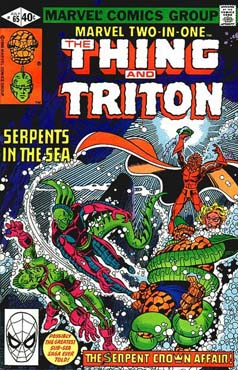
I know I've commented on edges of this before, but here goes: at the flea market this weekend I scored a couple of my current targets - pre Crisis/pre-1988 team up comics - in the form of a DC Comics Presents #39 and Marvel Two-In-One #65. As I get older I have a deeper nostalgia for these sorts of tales.

George Perez on one, Ross Andru on the other
But more important is Plastic Man artist extraordinaire Joe Staton doing the interiors for DC

The thing i love most about these stories, moreso on on the Marvel side, is how disconnected they are, but aren't really. Let me unpack that. These books are designed for one popular hero and a rotating cast of second heroes. These should all be stand alone stories because the team up hero changes. 

On the Superman side the feel of each issue is determined by who he's teamed up with, so this really feels like a Plastic Man story more than a Superman one. And my sense is that DC editorial would pitch "we need to boost this character or complete this unfinished story" because DC always, always cared about that continuity hole stuff. DC feels like cleaning up untidy bits. 

But often in Marvel they aren't just one off stories. They are these weird things like Marvel Two-in-One where the Thing teams up with people. Here the FF are approached by the aquatic hero Stingray to assist someone who needs to meet the Inhumans, and Thing volunteers to take him, and they get attacked on the way. That was last issue. This issue Stingray is unconscious and Thing has to save them from a deathtrap but is helped by the Inhuman aquatic hero Triton. They beat up most of the bad guys, but said bad guys got away with the MacGuffin that had NOTHING to do with Stingray's mission. So Thing has to take off after it and teams up next issue with Scarlet Witch to get the MacGuffen back, and then lock in in Project Pegasus, which turns up in MTiO a lot. 

Now, this is kinda crazy. Stingray to Triton to... Scarlet Witch? 

More importantly, next time we see the MacGuffen, er, Serpent Crown, is in Marvel Team-Up, Spider Man's team up book. where he team up with Thing and Scarlet Witch, but also Dr. Strange and Quasar. This issue is 2 years later. These are all Mark Grunewald picking up and running with a story threat that Steve Engleheart started five years before that, where Engleheart being Engleheart had the villains be an evil Oil Company because it was the 1970s and he had just had the head of the Secret Empire be Richard Goddamn Nixon. 

That's quite the crew

What I'm getting at here is not just the ragged and unplanned nature of the comics in general, but the free-wheeling nature of the team-up books in specific. Marvel had a small stable of writers and a lot of experimental books that lasted a year or two, or characters that rotated through their Marvel Premier, or Monsters on the Loose or any other weird book they were running. And for these the book would end, and the writer would of their own accord carry the plots to the next book they were working on. And these would often be the team up books that were popular for the central character and kind of muddle along. And led to these sorts of ragged, organic stories where heroes bump into each other and we accept the strangeness of it because comics. 

So much of this got lost when comics started organizing more - the next time we see the Serpent Crown it's in a 14 Annual crossover for the whole Marvel line - and I think it's to the genre's detriment. Ron Edwards goes into the the blessing of this making it up as you go unfinished story style in Champions Now, which for all it's issues is audacious as hell. He really wants you as GM to lean hard into this feel. 

I'm going to chew on this a bit along with the Weird Tales game frame and more on the New Salem setting, and more on module design. I swear this stuff is coalescing. 

Tuesday, July 30, 2024

On Doctor Doom

I'm sure everyone who cares to know has seen the big casting announcement, and all the hoopla about the least important Fantastic Four related casting. 

You heard me. 

I didn't always feel this way. Back in the old, pre millennium days, Doctor Doom was a proper villain because people knew how to write proper villains. Lets take a quick look, shall we? 

He's a brutal, violent, totalitarian dictator who demands absolute control over the lives of the people under his rule, but as long as they all keep their heads down, do as their told, don't get above their station, and don't try to leave the country, everyone will be happy. He's Benito Mussolini by way of Nicolae CeauČ™escu, only in power armor. Doom is the State in Latveria, complaining bitterly about the country not being respected while harkening back to an imaginary past that made it the equal of other European states. 

Which is a laughable concept. It's a Ruritania, a fictional postage stamp country. I appreciated the realization that in the cold war it would have been a US ally against its neighboring Communist states were Doom not such an obvious villain. Doctor Doom: so bad even the Reagan Administration wouldn't partner with him, But I digress. 

So why isn't Latveria in as bad a shape as similarly situated countries? Because Doom has legit super-tech chops. Give him that. Everyone is employed in or educated for supporting his super-tech advancements to keep the economy humming. But also he carelessly eliminates his best scientists as potential rivals or "fools", and he's so paranoid that none of his technology leaves his control. it all stays in his basement, er, dungeon. 

And to what end does he place this massive technological advancement: getting revenge on his college lab partner for being smarter than him, and wanting to spend more time with his mom (who is dead and in hell) - because he never learned to grieve and because people 'disrespected' his family once. Good. great. Nice thinking. His one girlfriend left him when he refused to move on like a normal person and he has been obsessing about her ever since. 

So we have a guy who spends all his time locked in his basement with his expensive toys stoking grievances with no romantic relationships and no peer friendships who lashes out at anyone who he thinks makes him look bad and insists on a dominance only worldview with his employees. He maintains a nouveau-riche appreciation for great European arts and culture that ends with the interwar period of art strongly challenging the status quo because that's what Fascists always do.

Basically, he's king of the Incels. 

What else do we know about this guy? He's a Romani from back before we stopped calling them a racial slur, but also from when all Romani were the exotic magical thieves of Europe*. So naturally he was also a magician who dabbled in black magic. As a way to get his mom back. Because mother issues. 

Oh and after he was kicked out of college for using university funds to try to create a portal to hell (but fucked up because his math was off and he wouldn't listen to Reed's corrections), he... <checks notes> Oh. Oh my. Went to the far east to find a secluded monastery and master all the physical and psychic arts until they declared him their master. So that's a thing... that happened. Wow is that some nicely coded yellow peril meets white supremacy. 

All of this worked (well most of it) in the 1900s because the comics knew he was the bad guy. The writers were people who knew the wars in Europe, knew what dictatorships looked like, knew what these sorts of threats these ravening loons were. Half the time Doom loses because he can't not fuck up his relationship with his business partners before the deal is over. His grievance against the Fantastic Four is built on such a slender reed (heh) that its almost comical were it not for the fact that he is played as a deadly threat... right up until he screws himself over. 

He's a great villain for a returning comic book serial - lots of angles, clear if crazy motivations, explanations for how he can get away and come back. 

And then the 90's happen and then the 2000s happen, and it just gets worse inside the comics for a lot of reasons I'll get to in another post, but Doom starts getting elevated past his Crazy Dictator status, in part because people forget. They forget the threats to their people and neighbors and European dictators cause. They forget the Cold War. They want their protagonists to be edgy outsiders who, if they work with a team, the team has to bend to them and not the other way around. And there's the Fantastic Four whose team leaders are LITERALLY your really smart Dad, your really capable Mom, your dad's wacky best friend  (who's smart than you but at least hides it: Ben's a fucking Astronaut, yes he's goddamn smart because they all had to be) who could be an edgy outsider except he's always still your dad's best friend, and the actual uncle who was edgy once but now is just that guy from school who likes cars and gets girls. "Dude no!" they yell, "I can't see my parents as the heroes of this story! I have to rebel against everything they stand for plus she's a wine Mom who like cares about stuff!"

But what represents everything they stand for? 

Hey, lets make Doctor Doom cool! What if we write books where my dad is actually WRONG ABOUT EVERYTHING and MAKES THINGS WORSE while his worst enemy gets to be more powerful and cool and did we say he dabbled in magic? HELL NO HE'S THE BADDEST BADASS SORCERER ON THE PLANET! and have him fight EVERYBODY!

So in the end, I don't care who they cast as Doctor Doom to fight the Avengers, because Doctor Doom isn't designed to fight the Avengers. And to be honest, Doctor Doom isn't the first movie villain for the FF. He's the second, or most likely the third. He's the foe you build towards. 

Unless you want to rightfully make him the sometimes dangerous but mostly self destroying king of the Incels. But I doubt that's the take. 

* remember, Magneto became Romani just to explain the possible Scarlet Witch/Quicksilver parentage when they decided to do that, and all the X-Men were coded Jewish back when the book was a metaphor about being Jewish and having to assimilate and hide what you were or people would put you in camps. Once Claremont openly made Magneto a holocaust survivor the metaphor for everyone else shifted from assimilating Jews to closeted Gays because the metaphor had been actualized.


Wednesday, July 24, 2024

New Salem: Revolution - module retrospective on Marvel Super Heroes modules

I know these aren't connected to V&V, but I feel like I'd be doing this project a disservice if I didn't do a little compare and contrast on what competing products were being published. So here are the three Marvel Super Heroes adventures I have on hand. (I also have some DC Heroes adventures that I'll look at next week.) These are for the Basic version of the game and all came out in 1984. I know I owed the first 5 of the adventures but my copies of Breeder Bombs (for the X-Men) and Murderworld (For the FF) are lost to history. But if memory can be trusted, they don't bring much different to the table. 

Hot Damn do these look pretty, but when you can get John Byrne to do your cover art
in the 1980'syou have hella more resources than FGU...

The three modules are Time Trap (Kang pretends to be Immortus to get the Avengers do undo their own history), Lone Wolves (AIM is planning several attacks on the city and Daredevil/Black Widow/Heroes for Hire stumble on a thread of the threat), and Cat's-Paw (Alpha Flight deal with the Leader's complex plan, and things past that). Each of these is designed to look and feel like the adventures of their target heroes, which since it's MSH is to be expected. I go back and forth on playing existing heroes, but generally if you're playing Marvel Super Heroes of DC Heroes my experience is the game runs better if you're playing existing characters. YMMV

But the question is are these any good? Ehhhhhhh.....

Time Trap is GREAT when it comes to tying in existing Avengers lore. All of the sequences link to certain moments in Avengers history, and in one you can point to the actual damn issue where the PCs are messing with their own timeline. As a comics nerd this is just golden - I used the skeleton of this adventure in my own X-Men game as an "annual" where the current PCs got to team up with the original team where Kang was manipulating them (plus Scarlet Witch, who was on site) into undoing the Avengers. Wonderful, so much fun. 

The module as writ is a straight line railroad of nothing but fights: Immortuls (secretly Kang) shows up, explains a "problem" and sends the PCs off to fight Mimic. Win or lose he whisks them back, and then sends them to fight Drax. Then Super Skrull, Then Grey Gargoyle. The the real Immortus shows up and sends them to get a dohicky to undo this. Then they fight Kang and Dragon Man. Yay. There's no space for the PCs to breathe, no role playing, no detective work, just fight after fight. It's a mess. 

Lone Wolves does feel like a crossover of 2 issues, or two annuals, of the Power Man/Iron Fist and Daredevil (working with Black Widow) of the mid 80's. It's still VERY linear, with AIM/MODOK having hired Kraven to run a field test of their rage-toxin, and Kraven using Sabertooth and Vermin to front line the event. The book acknowledges the heroes have Contacts, and the general data those contacts give, and then a lot of possible clue trails for them. The module sets up how those clue trails lead to Kingpin as the last information source, but that the Punisher is also murderously running this to ground and several places where he and the heroes can fight. The assumption is that the PCs will get Kraven's hideout from Kingpin but you don't have to. I really think it's better if you don't. 

Having used their actual in character skills to get to Kraven the PCs have to break into his predator infested base and defeat him (and Sabertooth and Vermin if either got away) to find out who hired him and created the rage toxin. This gives the name MODOK, and now the PCs have to do a bunch of detective work to find the AIM base, which again loops back to Kingpin and a much more in keeping "I'll tell you where MODOK is if you stop this crime being perpetrated by one of my rivals" quid pro quos that feels VERY 1980's street level Marvel. Once they have AIM's address it's a sneak/fight into the base and deal with Taskmaster and MODOK. 

There is a lot to like here, in that it feels like a Feng Shui module of set piece fights held together with investigations. The GM is given various options, the players can use various paths, and as long as you edit out the first Kingpin instance (though the PCs might go there for questioning) it's no more or less railroady than a classic Call of Cthulhu adventure. Yes, there are strong assumptions that the PCs will get involved (too much verbiage in how the riot in scene one gets ever out of control until the PCs do something) but not the abuse of PC stuff that we saw in some of the contemporary modules. Rereading this now, I kinda want to run it. 

Cat's-Paw opens with the PCs being sent on a mission by their government contacts; an old manor house that contains high tech equipment guarded by Sabertooth and Constrictor. Yeah, Sabertooth again. This was before his X-Men Days, but at least he and Constrictor have worked together in the comics (Power Man & Iron Fist) and in Canada (in Iron Fist's solo book). Win or lose the heroes find one clue that leads them to the James Bay Hydroelectric Dam, where they are caught between two different villain groups - Mauler and the Raiders, and a pair of Synthetic Hulks - and a just introduced NPC gets kidnapped no matter what the PCs do. Interestingly, if someone is playing Sasquatch he might also be teleported away and the PC provided a different Alpha Flight hero. That's an interesting comic book twist. 

In any event the only trail leads to Justin Hammer's base, where they fight a bunch of his revamped tech villains before he hologram monologues at them about "The Other", the person responsible for the synthetic hulks. But there are no leads until a new villain shows up, created from the NPC inevitably captured 2 fights ago. This gives the heroes one clue to get to the Leader's base, to fight him and find that he is being manipulated by a new Great Old One, the big bads in the Alpha Flight comic. Cue big fight. There's even a "how the NPCs solve the problem if the players fail twice to make sure this doesn't end the world." 

Yeeeah, this one I have no interest in running or modifying. Yes, it has some Alpha Flight elements in it, but the plot is completely linear, the players have nothing to do with solving the mystery, and the collection of opponents makes very little sense. 

What do these adventures tell us? Tune in soon, true believers!

Thursday, July 18, 2024

Quick Art Recap on Alone Into the Night

I commented in yesterday's post about the Zircher art in the Alone Into the Night module, where two of the three spalsh pages for the short one hero adventures are kinda bangers. 


Both of these really catch the tone of the adventures in question, drawing on specific elements from them. Just fun stuff that you can easily see as the the cover of that months issue.

Wednesday, July 17, 2024

Memory Lane: Codename: LAZARUS for V&V

The last of the PCs I actually got to play for V&V that I'm willing to share (there was one more who was part of a wildly appropriative campaign concept from one of my best college friends that didn't last past the first session...), this one for a game where my friend Jesse - the one who ran some sessions in my campaign world for a while - started his own campaign world. He really wanted to focus it down so that every hero had a single clearly defined power. Everyone got 4d6 drop low for basic characteristics and a power roll of 2 (so we rolled 4 times and had 2-3 'powers' + possible weakness) and you needed to end with either 1 power and skills or multiple powers that clearly went together.

Jesse was a big fan of Strikeforce: Morituri, the comic where humans got eventually fatal super powers to fight off aliens. When he was running games in my world he had aliens invade where the alien race, having no metahumans of their own, were volunteering to become temporary superhumans to aid the conquest of Earth. I this game, the approach of the alien fleet was producing an energy field that gave some humans super powers - some of whom became heroes and some of whom were recruited by a shadowy alien advance team. 

On the surface it was standard super hero stuff, but kinda like homefront golden age comics where the villains were 5th columnists undermining our world. The alien agents had access to some hyper-tech, which gave them an edge as we were still getting our act together - if it had occurred to me I would totally have gone Brainiac 5 super-intelligence as power to invent the crap out of things, but it didn't. Instead I had 

CODENAME: Lazarus (Sterling Stryke)

Side: Good    Experience level: 1

Affect/Gimmick: 1980's action hero with regenerative powers. Just imagine he's being played by Michael Dudikoff from any of his Reagan/Bush 1 era films, but that he's also even more dearly impossible to kill. He's an expert soldier, force recon for jungle ops, undercover urban agent, martial artist, weapons expert, and ladies man. 

 Yeah, this guy; That's what we're talking about

Status: tactical leader of the Project: BARRICADE Earth Defense Team. 

Powers: 

  1. Revivification (modified): This gives Sterling the following superhuman abilities
    1. if incapacitated he will appear dead, and "revive from the dead" one hour later with full HP
    2. If Killed, once a week he returns from the dead 23 hours after his death. This is at 1 HP and 1 Power point.  As long as he has 1 Basic Hit remaining he will recover.
    3. Regeneration as the power, but he heals every 5 minutes rather than every turn. This makes it an out of combat only ability.  He cannot heal from damage caused by magnetic fields. 
    4. Heightened Endurance +7
    5. He can hold his breath and operate normally for 7 minutes.  
  2. Heightened Expertise: +4 with all modern military weapons, including unarmed HTH. This also gives a +4/+20% bonus on any military tactics or strategy tests.  
Weight: 180               Basic Hits: 4         Agi Mod: 0
S: 15        E: 25           HP:  30
A: 16         I:  14          Pow:  70
C: 17                           Move: 56"
Accuracy: +2 (+6 with military)
Damage Mod: +1
Reactions Mod: +2/-2
Carrying Cap: 528    HTH: 1d8

Inventions: None yet, but he always had an array of modern military gear on hand based on the mission. 

Background/Origin: One of the top black ops agents of a government intelligence agency known as Project: WHIPPOORWILL, Sterling fought against Soviet agents and Central American drug cartels until the approaching waveform gave him impressive regenerative abilities. Once he discovered these he stepped forward and was integrated into Project: BARRICADE as the team's tactical leader, which has been... challenging to say the least. Fortunately his survival based powers give him time for second chances. 

I played Lazarus, the few times we got to play, as a caricature of an 80's action hero - his favorite schtick was Gorden Liddy-Like shoving a knife into his arm just to prove it didn't phase him - and getting by with firearms and a Ka-Bar knife would get him to low superhuman damage ranges. At the time the game stopped I had just recovered one of the enemy flight packs for possible reverse engineering, and it was the sort of game where all the PCs might have had access to them in time. 


New Salem: Renaissance V&V Module - Alone into the Night and Organized Crimes

This is the last of the V&V module retrospectives just because these are the last of the modules I own (I also own the villain sourcebooks but those aren't as useful for my purposes here). This time we're looking at Alone into the Night and Organized Crimes, both from Ken Cliffe (also responsible for HONOR and the Super-Crooks and Criminals supplement) and with art from Patrick Zircher. I hadn't realized until working on this series just how much content V&V had from 1982-1985 - 21 items from the rulebook through the Trouble for Havoc shared system adventure with Superworld and Champions). Since I didn't get them all at once but in pieces from 1983-1994. These two came at the end of that, purchased when one game store bought the stock of another disorganized game store and had these somewhere I could see them (along with TOTEM). 

Again we are looking at Zircher art, which is always so crisp and clear
There are two really nice splash pages in AitN I'll add later

The two modules aren't linked so I have to tackle them separately 

Alone into the Night is a collection of three solo adventures for GM and 1 PC, which is a style of play that works very well for supers. Super characters have a high degree of presumed competence, a wide latitude for how they can solve problems, but a clear set of expectations on what they are supposed to be doing (which V&V tries to reinforce with it's Alignment and Charisma systems). All three have a mystery element to them, but the first is a sort of horror mystery, the second a crime story, and the third a more standard comic book nonsense. None are great as mysteries because the author doesn't know how to structure them in a way that doesn't feel railroady. 

This makes the first (co-created by Kent Pauling) is a series of set pieces when it should more properly be an expanding incident: in the 1930's there was a serial killer in Our Fair City named the Garrote who, um, garroted people, and left pennies on their eyes. Shot by a police officer who stumbled onto a murder scene, Garrote escaped observation and vanished.  Since the murders stopped he was assumed dead. Rumors have swirled in the decades since that  the Garrote's costume and weapon were hidden in the cornerstone of the then under-construction Mayfair building. That time capsule is being opened 50 years later. There are 5 people who have an exceptional interest in the contents, several of which are tied up in a legacy/blackmail scheme. But instead of there being a roughed out timeline and motivations there are a lot of crimes the hero can't stop, murders they can't prevent, and a set piece fight scene at the end (admittedly in a neat locale). It just feels forced. 

The second is a political/business thriller, but it too is a series of set pieces of a different type -The PC has to be at the movie theater in their secret ID for the reporter on the run to drop an audiocassette into the hero's pocket before being shot down in front of them when exiting the theater, clutching a card with an address on it. Nothing the PCs do will save the reporter. Capturing the gunmen won't reveal any more information than what is already on the tape. The card leads to a "hero vs. hero confusion battle" where the PC encounters a grim vigilante pretending to be criminal to infiltrate the gang scene, but reveals where the person named on the tape is hiding. No other path will let the PC know where the <checks notes> industrialist leader of a major corporation... might be. Then the PCs is assumed to confront the person who ordered the killing, and fight his super-bodyguard as the industrialist tries to escape and disappear. Again it's all so forced, like 1990's level railroading a decade early.

I do want to give props on one thing: these two both give breakdowns of what happened in the playtest games and while #1 ended exactly how the story would have ended in any comic book with the player unable to stop the events, the second ended with a legit PC failure that doesn't read like railroading but the stakes of the adventure being explored and failure having ramifications. But the getting to there doesn't feel fun. 

The third is just a mess. Like literally a mess. Like "of course the player-hero will not understand much of this when he/she sees the computer printout. It's always amusing to see a player deal with the frustration of attempting to decipher a possible set of clues." level mess. The adventure is full of indecipherable data, lack of clues, and then responding to another attack. Since the villains plot is both high stakes (control of Canada) and absurd (by murdering all the candidates for Prime Minister via his super villain team), it's just <tosses up hands in frustration> 

There are two workable ideas here but both need a ton of work. And in all cases the 1980's convention of writing up the adventure as if it were fiction for the GM, who will enjoy learning things as they go and being surprised by the endgame in their prep, is rampant. (And happened in HONOR too....). At these there are modular and fill and common need. 

The on to Organized Crimes... which is a very odd beast. There is absolutely no introduction, to the GM. It opens directly with the PCs assisting with a high speed chase between fleeing robbers and slowly opens into a highly organized smuggling ring with the leader, the Organizer, and his group of super-muscle who are... ummm... kinda emotionally disorganized. The PCs are eventually able to disrupt the Organizer's smuggling ring but he escapes and starts a new plan to pit the local criminal gangs against each other and then consolidate the remnants and claim total control of the city's underworld. The players trying to stop this is disrupted by members of the Organizer's villain group (escaped but partially disbanded) who seek revenge on the heroes. And for some reason the Organizer's back up HQ is in a circus in NYC Central Park, with the PCs having to fight circus members at the end. 

There's no way this modular, and it forces a lot of assumptions into the setting that might not fit the campaign. If this were presented the way Dawn of DNA was, with the Organizer's moves appearing disconnected, and his henchmen (and wow do the Midnight Men look like the Deviants from DNA in dynamics...) being somewhat of screw ups leaving him open, this would work better. Or if we just ended the adventure at the end of part one. Or if Part 1 and the Midnight Men also had a circus theme and the villain was the Ringmaster and not the Organizer... all of these options would make it more coherent. 

You could make the argument that updated any part of these could work for an NSR game - save for AitN part 3 the stakes are low enough that they could be inserted into play for a session and be followed up on. But there's a lot of reworking needed, or integrating these ideas into the campaign world before you start (as I did for the 3E Emirikol game). 

Tuesday, July 16, 2024

Memory Lane: the Silver Knight for V&V

This character was the other one based on me. When I started a new campaign world in High School, the one I still primarily use for V&V adventures, which you can find here if you're interested, one of the other players, Jesse, wanted to try GMing for a bit but didn't want to build a whole world so I let him run games in mine - everyone else used their same PCs from the hero team Ground Zero and I got a chance to play. (My eventual decision to remove 'me' from the game world to explain my absence in the college years game means this PC is not in the campaign world website.)

Silver Knight played into my love of big bruisers, with his Chemical Powers mixed with heightened strength B and heightened expertise with bastard sword. He was an ok PC but stymied by the issues with agility/initiative in a team of martial artists and speedsters.

The Silver Knight (Brian Rogers)

Side: Good    Experience level: 2

Affect/Gimmick: He's a chivalric knight in appearance and general attitude, but also made of solid metal for lots of extra durability and super-strength. I liked the general idea of someone projecting their psyche into an animal or object to control it, but I wasn't keen on the idea of leaving an unprotected body behind, so instead I merged with the knight miniature I carried to animate it, and it grew to human size. I wanted Silver Knight to contrast with the rest of the darker mid 80's vigilantes on the super team, but I didn't play often or long enough for it to work out. 

I've been looking for a good image of a knight with a bastard sword for a visual reference but there is so much grey goo of AI generated stuff out there that I can't find something I like and am willing to link to. So here's an image of The Knight from DC comics. (edited to add: I just remembered I can block pre-2023 results, which got me this image of a Silver Knight from the DarkSouls3 game, which is closer to what I wanted; his weapon is ridiculous, but what can you do?)


Status: a probationary member of Ground Zero, he can draw on their government and MEDUSA contacts in a crisis.  

Powers: 

  1. Chemical Powers Item - Mithril: Brian carries a small (2" high) statue of a knight made from the metal out of myth. Thanks to the enchantment he is able to 'merge' with the statue, turning his body into a 6'6" tall knight made of shining silver metal. This takes one action to transform and gives him the following advantages
    1. His weight is increased by a factor of 5. 
    2. He has a chemical powers defense at no action or movement cost. He also has no need to breathe while in this form.
    3. His body generates a shield on his left arm which is always attached to him, which he uses to give Chemical Powers defense to anyone within 1" of him at no action cost - it does cost 10" movement.
    4. This body generates a sword which is always attached to him. This is a +3 to hit +1d6 damage weapon when used with the flat of the blade (his normal method) but he can use the edge to add a carried Chemical Powers attack for 2d8 damage at a PR of 8 per use. 
    5. He gains 20 points of strength. This is tied with his Heightened Strength power. 
  2. Heightened Strength B: +27 points total, but only +7 of those are used in his 'normal' form. 
  3. Heightened Expertise: +4 with all medieval weaponry attacks (including fists) This training also gives him a +4 agility solely to offset the penalty for weight gain
  4. Heightened Charisma B: +8
  5. Reduced Strength: Modified so that his Heightened Strength is only partially available outside his transformed self. 
Weight: 192 (960)       Basic Hits: 4 (20)    Agi Mod: 0 (-4)
S: 15 (35)  E: 9           HP: 8 (75)
A: 12         I:  13          Pow:  49 (69)
C: 21                           Move: 36 (56)
Accuracy: +1 (+8 with sword)
Damage Mod: +1
Reactions Mod: +4/-4
Carrying Cap: 390 (21,012)    HTH: 1d6 (3d10)

Inventions: None yet, but I think I was working on a mithril crossbow for the armored form that would let me make chemical powers attacks at range. 

Background/Origin:  Brian Rogers was a typical High School student deeply into theater and role-playing (Performing Arts background, History) until a visit to an antiquarian bookseller brought him the journal of a dark ages scholar that contained within it a secret recess holding the statue of a medieval knight. The books was not only a medieval warfare manual (whose precepts Brian rapidly absorbed) but also instructions on how to activate the immense power of the Silver Knight. Since then he has been doing his best to protect people from superhuman violence. 

My plan for the hero, if he ever operated solo, was to do the 'stronger than he looks' teen detective thing until things got dangerous, then taking the weightier and nearly indestructible form of the Silver Knight. His meager 1.6 actions per round limit him somewhat, but he does have a solid enough (13-) chance to hit normal foes and does an insane (3d10+1d6+1 with sword) amount of damage that he can boost even higher with the chemical powers attack. Not a lot of people can take a 31 damage average hit. More often with the super-team he would disable opponents vehicles,  build or break barricades, defend and rescue innocents, etc. in the proper heroic mold. 

I think the character has a lot of potential in the right game and wouldn't mind trying him again. 

Sunday, July 14, 2024

Memory Lane: Manhunter for V&V

This was the first V&V character I had based on me, back in 6th grade. I never had the chance to play him because I was always the GM.

Manhunter (Brian Rogers)

Side: Good    Experience level: 1

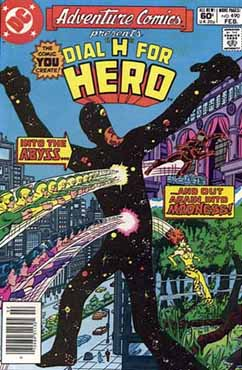
Affect/Gimmick: True to the name he's a detective type/bounty hunter hero with magically based illusions as his main power and carrying a staff that collapses into a cane and also has a detachable head with cable for swinging and entangling people and stuff. Much like with Renegade he was supposed to rely on confusing and misdirecting his opponents attacks with illusions; the sort of thing that works much better in fiction than at the game table with other PCs, especially early teenage boys who want to show off their powers rather than do subtle detective work and illusions that leads all the enemies to shoot each other. The visual image of him - full face mask, curved-edge long cape, silver cane-staff - came from one of the reader-provided heroes in the Adventure Comics run of Dial H for Hero, but I no longer have the issues I once owned. Never throw anything away, kids. NEVER. Anyway I'm pretty sure that's the origin of the image, but without the full issues I can't confirm. He also looked kinda like Puzzle Man from the Marvel Comics ads, but without the crossword motif.


Covers by Ross Andru and George Perez explain why I bought these in '81. 
Plus Puzzle Man, who interestingly was another fan-created hero

Status: Presumably I had intended for him to work with the authorities on tracking down criminals. I guess. It's I have no idea where I got this from, except maybe the Fall Guy was big on TV at the time. 

Powers: 1

  1. Heightened Intelligence A: +12, adds the Law Enforcement and Religion/Mysticism backgrounds
  2. Heightened Agility A: +14
  3. Special Weapon - Converti-Staff: this high tech weapon can appear as a cane, a quarterstaff, or a mace and chain as needed, and the 'chain' of the mace and chain can be extended 10" (50'), and retract with enough force to pull in 1000 lb. or rapidly lift Manhunter for swinging and jumping. Assume any form is +3 to hit, +1d6 damage.  
  4. Illusions A: Visual/Audible/Psionic, PR 3 per turn, 1 action per turn to maintain. This can cover an area or a single person (with a successful mind control attack)
  5. Psionics: Through specialized training he can use his illusions to 
    1. become Invisible or PR 3/hour only vs. living minds.
    2. Transform (C-1 Disguise) at will PR 3/hour, only vs. living minds
    3. Sense the minds around him out to 25" as a heightened sense; this is constant.
    4. 'Locks on' to someone in that range (with a mind control attack) he can follow them as per Telepathy. PR 3/hour
    5. If he makes an illusion directly attack someone he can make a PR 3 Mind Control attack to do 1d12 Power damage. 
Weight: 140                Basic Hits: 3    Agi Mod: +0
S: 10         E: 10          HP: 12
A: 25         I:  25          Pow:  70
C: 13                           Move: 45" 
Accuracy: +4 
Damage Mod: +5
Reactions Mod: +1/-1
Carrying Cap: 140    HTH: 1d4

Inventions: None yet, but I figure I would have made some 

Background/Origin:  Brian Rogers was a typical Junior High School student deeply into theater and role-playing (Performing Arts background) until he spent a summer living with his uncle in distant, far off, exotic Minnesota. There he learned that his uncle had, in the 60's, been a member of a group of mystically-trained international adventurers. After three months of intensive psionic tutelage Brian had unlocked the true potential of his mind, enhancing his intelligence and grace and giving him the ability to sense minds and manipulate perceptions. Taking these powers back to Connecticut he began his career in super-heroics, using his illusion powers to guard his identity and keep the criminal element off balance.  

I remember the image of the staff, and I knew I carried one because I didn't have natural weaponry or an attack power and needed the combat boost. I'm making it a special weapon here but I'm not sure; it might have just been something he carried, and was going to invent the other functions for if I could. The Psionics power was a grab back of things I thought illusions - especially his psionic illusions - should do or that I thought were cool. I still do. 

Saturday, July 13, 2024

Memory Lane: Renegade for V&V

The final of my three characters from Mike's game set in the 2037 Washington DC Metroplex, This was born of wanting to play a smarter, more detective oriented hero on the nights when no one else was showing up to game. Legerdemain was the noble hero type, Impact was a blunt instrument, and I wanted to play a front and center martial artist vigilante detective. I'm not sure why I decided to make the character at least nominally Jewish - most likely to to do something different from my others - but since the source books Mike was borrowing from had a lot of 1980's next generation Nazi villains in them the character morphed into a Nazi hunter shortly after his creation. 

And there ain't nothing wrong with punching Nazis. 

Today i have no recollection why I wanted to lean so hard into being a terror of the night that I had Heightened Charisma B and Prejudice to insure massive negative reactions from everyone, but I also know we weren't using the charisma rules as written (who did?!) this combo just had him be super scary and intimidating for everyone. I don't think I ever read Spider-Woman but the combination of his superhuman charisma and the prejudice ability are almost like here pheromonal power where everyone was either attracted or terrified by her. (hence the 'to know her is to fear her" tag line) - something about his darkness powers made him scary as hell. 

Renegade (Isaac Pearlman)

Side: Good    Experience level: 5

Affect/Gimmick: Two-fisted detective hero, terror of the night, hunted by the law and the cops both, who turned into a Nazi hunter. Very inspired by Batman Year One, I would even do the narration to my journal hard boiled hero voice over while playing. Since he's a shadow in the darkness there isn't really a visual image the manriki-gusari was inspire by the hero making one in the Guardians of the Flame series. 

Status: Wanted by both local and federal law enforcement for several deaths (he didn't kill them, but people do tend to die around him) and hated by several criminal organizations and feared/despised by the remnants of Nazi power, Renegade is a purely solo hero. 

Powers: 6

  1. Heightened Strength A +13 (this is a lot of training but also effects from the injection as his carry cap is superhuman)
  2. Heightened Agility A +10
  3. Heightened Expertise: +4 to hit with manriki-gusari (+3 to hit +1d4 damage; this has a blunt side to the chain and a curved edge side to the chain, and his current model is SR 22; he carries a spare that is SR 12)
  4. Heightened Charisma B: +22
  5. Prejudice: Some aspect of the injection that gave him his shadow powers has made him terrifying to both sides as Renegade, and slowly cost Isaac his secret identity. 
  6. Darkness Control: can create or control shadows, range is 69", 19" radius. PR 2 to create/reshape and one action to create/maintain
    1. Invention: He can modulate the light level in the darkness, making deep shadows with darker shadowy shapes inside them. This counts as Illusions A, but only for black and white images and counts as reshaping 
  7. Mutant Power - Shadowwalk: when inside shadow or darkness he can 
    1. See as if it were daylight (note that he can't see through shadows he isn't in or isn't controlling. imagine a space of light acting as 'insulation' against this power).
    2. Cling to walls/ceilings
    3. Teleport 7,600" range, PR 5 per use. 
Weight: 192                Basic Hits: 4    Agi Mod: +0
S: 25         E: 12          HP: 34
A: 24         I:  17          Pow:  76
C: 32                           Move: 61 ground or 7,600 teleport (7.5 miles) 
Accuracy: +4 (+11 total with manriki-guisari) 
Damage Mod: +3
Reactions Mod: -6 vs both good and evil
Carrying Cap: 1615    HTH: 1d10

Inventions: He has one invention with his darkness control, above, and the following permanent inventions. He's usually using an inventing point per level on one shot inventions to defeat individual foes. 

  1. Microrecorder/speaker lets him both record conversations and plant them to replay where convenient. This is used both to capture damaging information and confessionals and to set up confusion inside the darkness. 
  2. Safecracking Kit: This high tech kit gives him a +4/+20% bonus to open electronic or classic safes and locks without leaving marks. 

Background/Origin:  Isaac Pearlman (American, Research/Technology and Law Enforcement) was a forensic scientist who was assisting the clean up of a V.I.L.E. experimental location (as it happens, the one Impact escaped from) who discovered a vial of an experimental human enhancement drug. Unable to leave well enough alone he continued to research it, and finally injected himself with it. Already a highly skilled martial artist, his human potential was enhanced, letting him become faster and stronger. Something happened to his psyche and personal magnetism, giving him a terrifying intensity that started scaring off people he didn't already know well. And most importantly, it gave him an affinity for shadows and darkness that would make him the ultimate spy... or assassin. 

Using these powers he started spying on, and disrupting, criminal activities across the greater DC metroplex. Originally targeting V.I.L.E., he was instrumental in bringing down B.A.D., and collecting information on FORCE  (not from the module, a NPC vigilante in Mike's campaign) which he ultimately decided to not reveal. Finally stumbling across a new Nazi party in the US, Renegade found his true calling as a Nazi hunter, and has focused specifically on their activities ever since. 

Renegade doesn't kill himself, but he has no issues with maneuvering his opponents into attacking and killing each other, either through fostering a sense of betrayal, shadow plays to mask his activities, pushing groups to attack each other Red Harvest style, or similar methods. This indirect body count plus the unsettling nature of his superhuman charisma means he'll never team up with anyone. 

Thursday, July 11, 2024

Memory Lane: Impact for V&V

Continuing from the other day, here's the second of my three PCs in Mike mid/late 80's V&V game and more old fogey reminiscing 

In my memory we must have started this sooner than 1987 since I graduated in 1989, but it couldn't have been earlier than the September 1986 publication date of this comic, since this was the visual inspiration:

Steve Lightle was the bomb 

Which means for my memories to jibe I had to have played some summers in college (which I know I did) but also that we played a metric ton of games when I was in High School. It's hard to imagine now, especially with my old man schedule and watching my kids struggle to get in game time, but we prioritized gaming so much back in the day. 

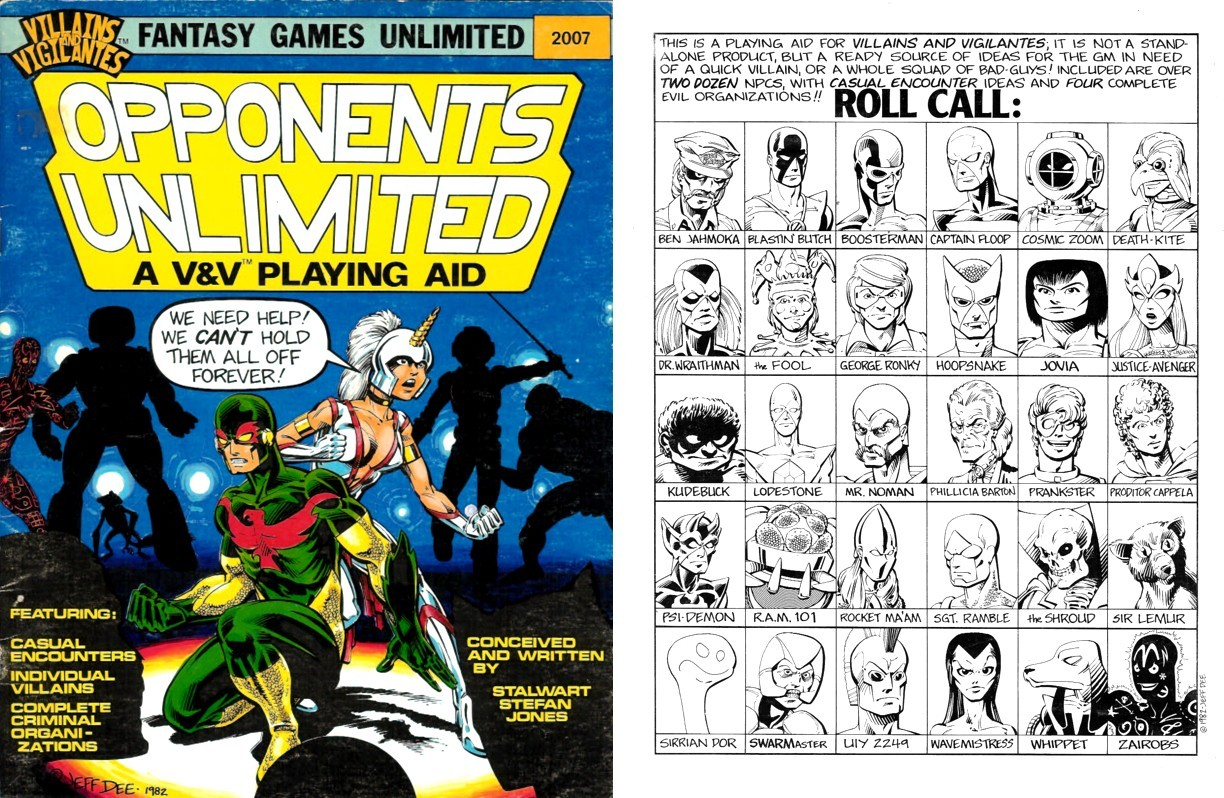
In any event, Mike was the one who had Opponents Unlimited, Super Crooks and Criminals, and Most Wanted Vol 3 as source material, which means we had to deal with V.I.L.E. and B.A.D., as well as a lot of Nazi adjacent villains; who thought we would be dealing with those 50 years in the future? I mean really? 


I did a long breakdown of this one across these posts

Mike was a firm believer in what would now be seen as OSR style play - actions had repercussions. Nothing was easy. Mistakes lived with you. Victories were seldom 100%. The monsters want to win. The earth elemental steps on your head to make sure. OK, not that in a supers environment but you get the idea. As a result of some frustrations of how Legerdemain with his classic good guy attitude was unable to score heavy victories against V.I.L.E. (who were very organized and national in Mike's game), I brought in a different character with a different attitude. Plus I really wanted to play with the Armor rules in V&V, which are a great translation of the power from the comics.

I've been torn on this but I'm going to present Impact as I originally played him with notes as to how I would do the design now. 

Impact (Adam Kuriakin)

Side: Good    Experience level: 7

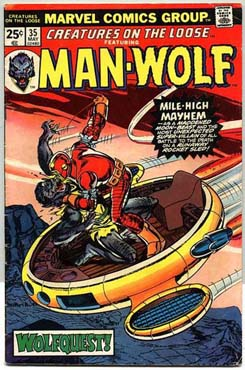
Affect/Gimmick: Thug turned anti-hero out of vengeance against his former employer. He's a but of a loose cannon on a road to redemption. The visual image for the character was the armor on this cover of Creatures on the Loose, a book title so 1970's that it came with its own bell bottoms and giant lapels. 


Surprisingly, it's Adolph Hitler in the armor; Also surprisingly, the armor changes color inside the issue.

Status: Wanted by both V.I.L.E. and the police, Impact is a hero in that he is a villain who targets and disrupts other villains. He funds his activities by raising V.I.L.E. and other villain organization bases for the cash and technology he needs to keep his armor running. 

Powers: 4

  1. Mutant Power Device: This reflexes booster partially imbedded in his forearm increases his agility by x1.5 for initiative purposes only. (round down, currently 24) 1 charge/round, 14 charges. (These days I would make this a Bionics so it's fully embedded and have it alter his initiative interval from a 15 down to 10; he wouldn't go first but a 5+ would have him act on 21, 11, and 1, rather than a 7+ for 31, 16 and 1)
  2. Armor B (Device) 100 ADR, with 3 inset powers
    1. Heightened Strength +20
    2. Heightened Senses: Telescopic vision (range penalties are 1/10th normal), Sensory Protection (-4 to be hit by sonic powers or flash attacks), Heuristic Analytics Suite (+20% detections) (why didn't I just triple his detects? gets to the same place...)
    3. Screamer Missiles: the spikes on his armband, he carries 6 at a time, range is Ax15 (240"), HTH +4 to hit, 1d8 damage but Sonic Carrier (1d12) damage, 3" radius explosion. 
  3. Energy Field Harness (Force Field device modified to mirror Flame Powers + Absorption Device): This torso mounted harness allows him to manipulate kinetic energy for several effects. It has 32 charges total for all uses. Assume a 15 in all basic characteristics
    1. Energy Field: one action to create brightly glowing energy field around body; this is needed to use other powers.
    2. Energy Blast (as force field): 2d8 damage, 30" range, 1 charge/shot
    3. Flight: Move at 45 MPH. 1 charge/3 hours of flight.
      1. Invention: Acceleration device lets him kick up to 900 mph. Doing so requires he be in his armor for the heuristic analytics and uses 1 charge per hour from his reflex booster. 
    4. Personal Force Field: 1 charge per 8 points of damage repulsed or 4 points that penetrate; this can be considered automatically started with the energy field creation if he chooses to do so, but continued uses requires actions as Force Field
    5. Absorption: One action and one charge to convert damage blocked by field to Carrying Capacity (25 lbs. per point) or charges for the energy field harness (1/point done, charges past 32 are lost) (Yes, this means that if he has a saved action and takes a 16 damage hit he can either get +400 lbs carry or (+16-1 for absorption -2 for the force field charge) +13 charges; I felt that was worth the nerfing the carrying capacity baseline on Absorption)
  4. Reduced Charisma: -6 , Max Charisma = 9 (the original character didn't have this, but given how I now understand the Charisma modification roles; given his near constant stealing of the enemies gear and money his charisma will never be high, but this does mean he gets bonuses with non-V.I.L.E. Evil characters)
Weight: 204                Basic Hits: 5    Agi Mod: +0
S: 14/34     E: 13        HP: 16/33 in armor
A: 16          I:  12        Pow:  55/75 in armor
C: 6                            Move: 43" or 63" in armor, 198" flight 
Accuracy: +2 
Damage Mod: +1
Reactions Mod: -2 vs good, +2 vs evil
Carrying Cap: 4,142    HTH: 2d8
Inventions: see above 

Background/Origin: Adam was a street thug pulled in as a baseline recruit for V.I.L.E., and he was picked by Sir Lemur as a test subject. Given Lemur's mind control powers it's not like consent was required, and when Adam woke with a bio-mechanical implant in his arm. The biological boost of the reflex booster burned the sedatives out of his system faster than expected and Adam was able to bludgeon the V.I.L.E. medical technicians unconscious and make an escape, stealing several experimental devices on the way out. 

Once free, Adam started venting his aggression against his former employer in ways that caught the attention of other members of the criminal element who V.I.L.E. had been muscling out of the Washington DC metroplex. Adam, now Impact, found some allies he could pay off with stolen funds to keep his armor working and back engineer his screamer missiles. This has given him a small "support gang" to back him up, but he doesn't work with them publicly, A handful of heroes are willing to work with him in his relentless attack on V.I.L.E.'s activities - relations good enough for him to be able to show up at their bases to request help on his attacks as long as it was kept relatively secret. 

This character was really fun to play in the dark hero mold, very different from what Legerdemain was like. And I made good progress in his goals, including beating Prodictor Kapella, stripping off his suit and burying it in a collapsed mine when I couldn't destroy it. Lots of fun stuff.